Why hire a professional photographer for your wedding?
It is a question many couples ask themselves, often when they are going through their wedding budget and looking for savings. "A friend has a good camera, surely that will do?" The short answer: no. The long answer is this article.
I am not saying this as a sales pitch. I am saying it because your wedding photos are the one thing that will remain once the flowers have wilted, the cake has been eaten and the dress has been packed away in a box. Twenty years from now, they will be all you have left of the day. And that day deserves better than a compromise. It is the whole point of my work as a wedding photographer in Dordogne.
You can't buy an eye for it
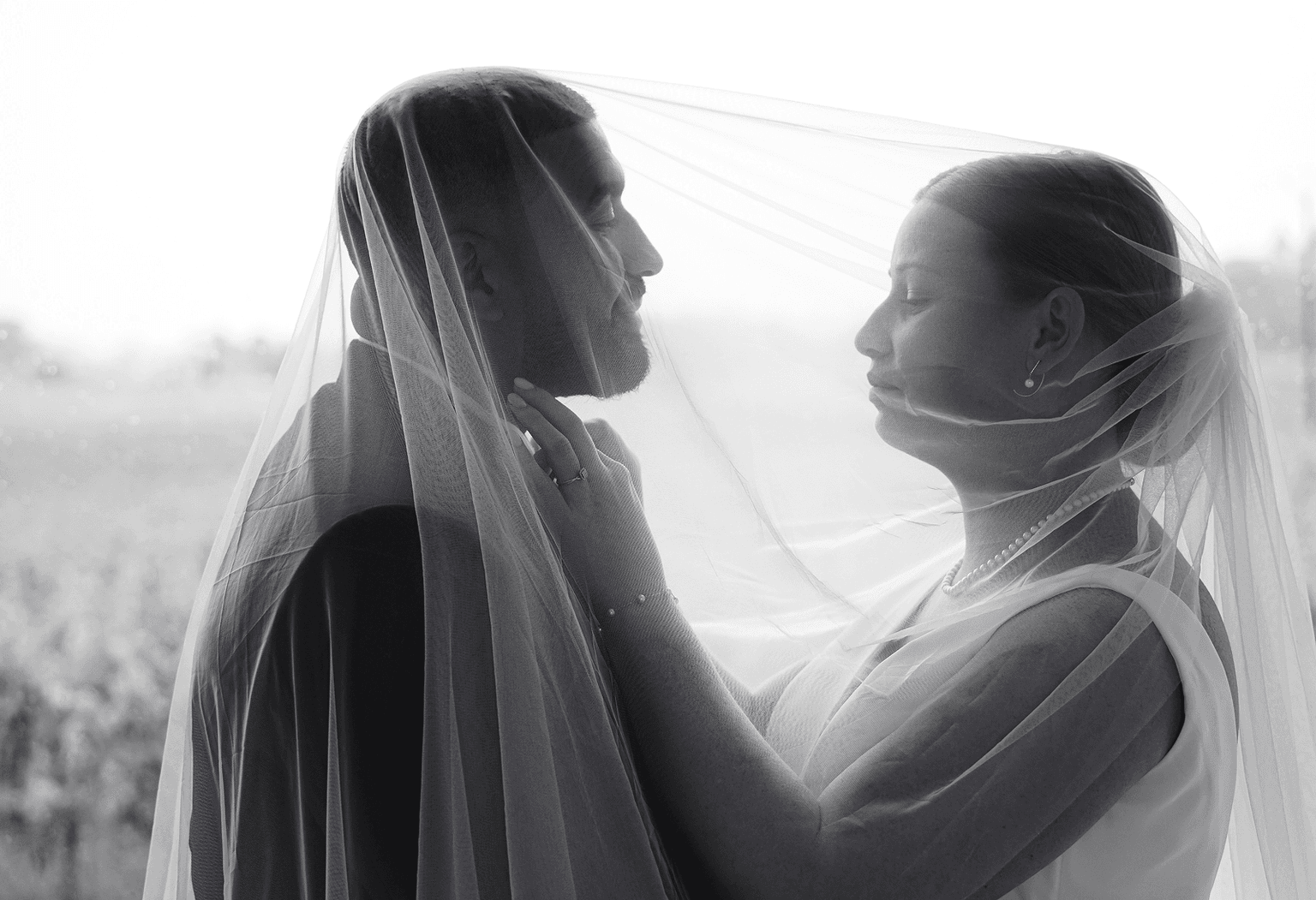
A good camera does not make a good photographer, just as a good saucepan does not make a good cook. What makes the difference is the eye: recognising beautiful light, sensing a moment before it happens, choosing the right angle in a split second.
A professional wedding photographer has spent hundreds of hours honing that instinct. They know where to stand during the ceremony so as not to miss anything, they see the tear coming before it falls, they notice the light streaming through a window and place the couple exactly where they need to be. However well-meaning your friend may be, they cannot have that reflex without the experience behind it.
Technique that serves the emotion
A wedding is rarely an ideal environment for photography. A dark reception room, orange artificial lighting, harsh midday sun in your faces, ceremonies in places where photography is restricted. A professional photographer knows how to work in all of these conditions: they know how to handle artificial light, use equipment suited to difficult situations and are never caught off guard.
They also carry backup equipment. A second camera body, spare lenses, plenty of batteries and memory cards. If something breaks down, the coverage carries on.
I take photographs so that, ten years from now, you can step back into that day as if you were still there.
Anticipation: seeing it before it happens
This may be the most underrated skill a wedding photographer has: anticipation. Knowing that at a certain point in the ceremony, the parents are going to well up. Knowing that the couple will look at each other in a particular way just before exchanging their vows. Knowing that the light will be perfect in ten minutes and that it is already time to get into position.
That sense of anticipation comes from the experience of dozens of weddings. It makes it possible to capture the decisive moments without getting in the way, without asking people to do things again and without pulling anyone out of the moment. It is what makes the photos true.
Post-production: the invisible work
A professional wedding photo is not just about what happens in front of the lens. It also means hours of work afterwards: choosing the best images out of hundreds, colour editing, balancing the light, and giving the whole gallery a consistent look. This invisible work is what gives your photos their coherence and their style.
Your friend may take some lovely shots in the heat of the moment. But delivering 300 edited images with a consistent, professional finish in the weeks that follow is a different skill, and a different investment of time.
The human factor: putting people at ease
Most people don't feel comfortable in front of a camera. Being photographed on your wedding day, with all your family and friends watching, is even more nerve-racking. A professional photographer knows how to help people relax, guide them discreetly and find the words that bring out a genuine smile or let shoulders drop.
Discretion matters too. A good wedding photographer goes unnoticed during the important moments. They don't ask people to do things again for the camera, don't cut into the speeches and don't disturb the atmosphere. It is a balance that takes time to learn.
And what about your friend?
Your friend deserves to enjoy your wedding. They deserve to have a drink with you, to dance, to laugh, and to be in the photos rather than behind the camera. By asking them to photograph the day, you hand them a heavy responsibility and take away their chance to simply be your guest.
Choosing a professional photographer also gives the people close to you the freedom to simply be there, with you.
The photography budget is often one of the first things to be cut when planning a wedding. That is understandable. But I encourage you to see it differently: it is one of the only parts of your wedding budget you will still be enjoying thirty years from now. The flowers, the catering, the venue: all of that passes. The photos stay.